In South Africa, make a plan is what you say when the water is off, the road is out and nobody is coming. You work with what you have. It is the most useful piece of disaster advice I know.
The Make A Plan Institute is the practice of Dr Leif Petersen, a systems scientist who spent 25 years studying how people get through fire, flood, drought and hard times in southern Africa, and who now applies that work to ordinary households on Queensland's Sunshine Coast.
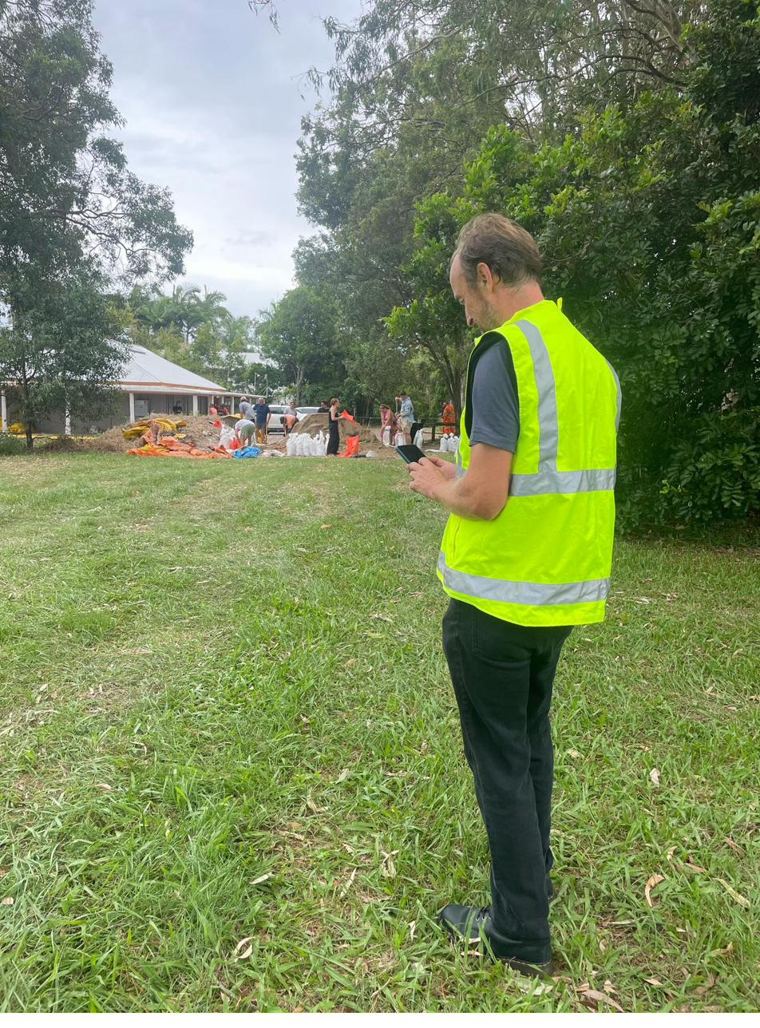
On the ground, NoosaLogging data at a community sandbagging point ahead of a storm.
Prepared, not prepping.
Weather is less predictable than it was, and a very strong El Niño is already shaping the season ahead. Getting ready does not mean bunkers and stockpiles. It means practical skills, sensible supplies, lower bills and neighbours who know each other.
The work here combines household readiness, energy and water efficiency, and community cohesion, built on evidence rather than fear.
Being prepared
Balanced and practical. Skills, knowledge and a few well-chosen resources that help in many situations, from a tripped breaker to a week-long outage.
Prepping
Built around the worst case. Large stockpiles and fortification, often driven by fear and distrust. Useful for a narrow set of scenarios and hard to sustain.
The long way round to Noosa.
A wildlife management degree from Brisbane led to two decades in southern Africa: training conservation professionals across the region, then founding a research organisation that worked street by street in townships where fire, flooding and water shortages are part of daily life. The lessons from those places are the foundation of everything on this site.
Queensland
1996
Bachelor of Applied Science (Hons)
University of Queensland
Natural systems and wildlife management.
Southern Africa
2000–12
Regional trainer and researcher
Southern African Wildlife College
Designed and ran vocational training for mid-career conservation professionals across the SADC region, and evaluated how graduates used that training in the field.
2007
MSc in Resource Management, cum laude
University of the Western Cape
2010–25
Founding director
Sustainable Livelihoods Foundation, Cape Town
Built and ran an independent research organisation for 15 years, leading more than 40 projects on livelihoods, informal economies and climate risk, with 12 years of clean audits. Kept teams safe and working through COVID-19 and the 2021 civil unrest.
2010–18
Township Economy
South Africa and Namibia
Eight years of research into township informal businesses across 10 sites, published as a book with HSRC Press. More below.
2013
PhD in Integrative Systems
University of Queensland
2017
Postdoctoral fellowship
National Research Foundation, South Africa
Informal food systems and food security.
2020–24
Water and Fire
Cape Flats, Cape Town
Research lead on a community-led resilience programme for runaway fires, flooding and water shortages. More below.
Sunshine Coast
2023–
Make A Plan Institute
Noosa, Queensland
Founded to bring 25 years of field work home. Advising on climate resilience and community-based natural resource management, volunteering in local disaster readiness, and filming The Resilient House.
The research behind it.
Two long-running bodies of research shape how I think about resilience: how people make a living where the formal system has left them out, and how communities decide for themselves what keeps them safe.
2010–2018, across 10 sites in South Africa and Namibia
Township Economy
Eight years of street-by-street research into the informal businesses that keep townships running, from spaza shops and shebeens to taxis, hair salons and street braais. Using small-area business censuses, mapping, photography and personal stories, the work shows how entrepreneurs adapt to planning rules, crime and competition, and what could help them grow.
The findings are published as Township Economy: People, Spaces and Practices (HSRC Press), co-authored with Andrew Charman and Thireshen Govender.
A £1 million GCRF/UKRI programme on runaway fires, flooding and water shortages in three Cape Town townships. As research lead, I worked with residents to identify the strategies they believed would work, and to put those strategies directly to the city's emergency and water services.
Water and Fire worked in three Cape Flats communities, each facing a different hazard: runaway fires in Overcome Heights, localised flooding in Sweet Home Farm and water shortages in Delft. Instead of arriving with answers, the team asked residents what works.
Around 200 household interviews in each community, run by phone through the COVID-19 lockdowns.
Residents documented their own experience through digital storytelling, walking community maps and photovoice.
Local co-researchers sorted every problem and solution and voted on the strongest ones.
Residents presented their Best Bets directly to city emergency services, water and sanitation officials and elected representatives.
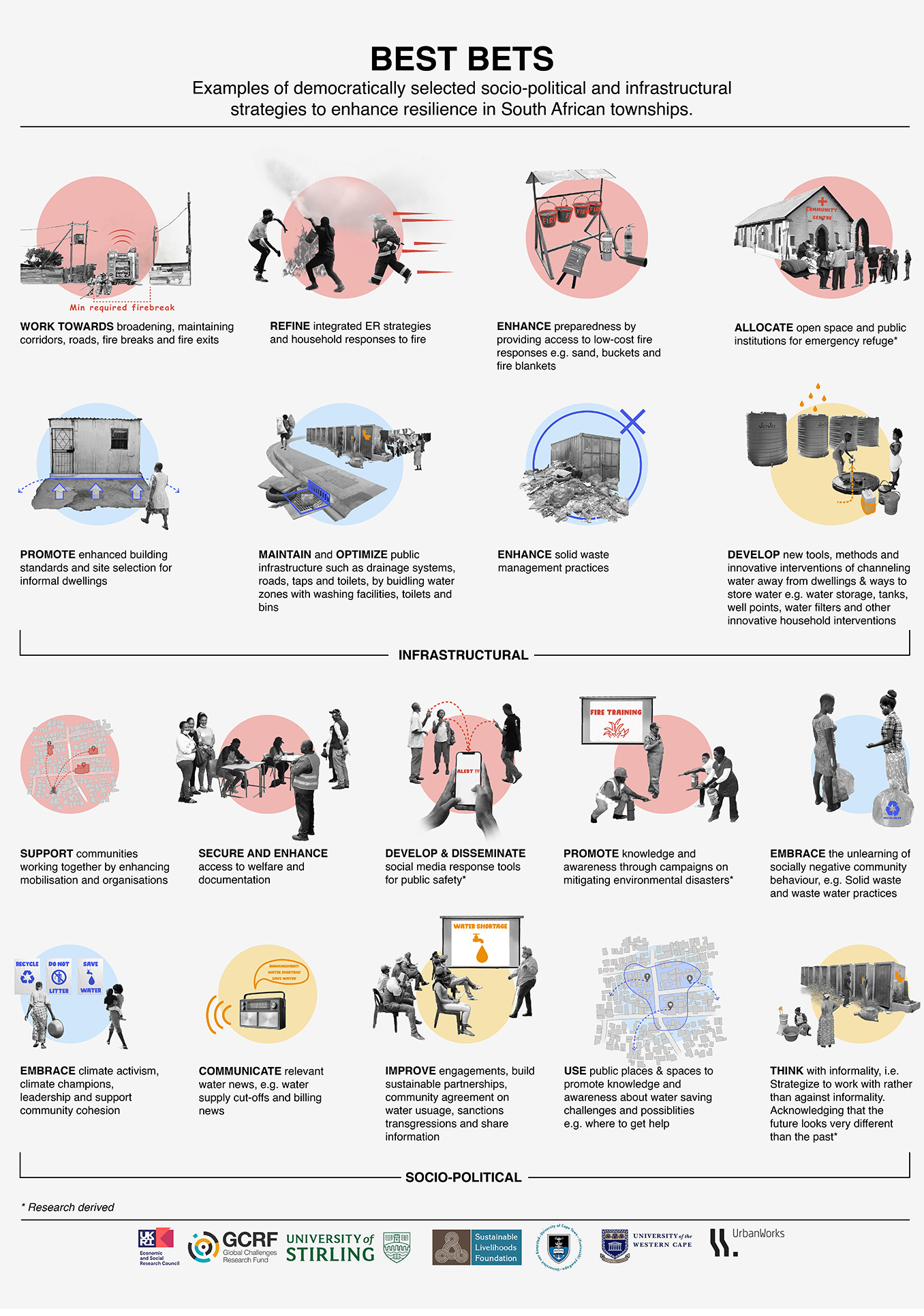
Many of the winning ideas were cheap and social rather than technical: buckets and sand at hand, open space set aside for refuge, and news about water cut-offs shared early. That idea runs through all the work here.
Best Bets for climate change resilience, Water and Fire project. Partners include the University of Stirling, the University of Cape Town, the University of the Western Cape, UrbanWorks and the Sustainable Livelihoods Foundation.
Published and on screen.
40
Peer-reviewed papers, including in the Journal of Mixed Methods Research and Ecology and Society.
1
Book: Township Economy: People, Spaces and Practices, with Andrew Charman and Thireshen Govender (HSRC Press). townshipeconomy.online
3
Documentaries on people, ecosystems and livelihoods, including an internationally awarded feature.
Season one: this summer
The Resilient House.
I have spent years telling other people how to prepare for disasters. It turns out my own house is a shambles. So I am fixing it on camera, one thing at a time, for under fifty dollars a go.
Each week I switch something off, test a claim everyone repeats, or race the clock to build something that works. The fixes lower everyday bills as well as risk.
Independent. No sponsors, and I buy everything myself.
Every method is shown on screen so you can check it.
Every episode shows at least one thing that did not work.
I turned the power off for 24 hoursWhat a storm-season blackout really does to a normal house.
One hour to make this house survive fire seasonEmber gaps, gutters and a written trigger point.
The cheapest way to keep food cold without powerFour methods, twelve hours, one clear winner.
Can $5 make dirty water safe?Why clear is not the same as safe.
Working together.
Councils and emergency services
Plain-language household readiness content, community engagement and evaluation of what your campaigns actually change.
Insurers and utilities
Independent, tested advice your customers can act on this week, without a product pitch attached.
NGOs and funders
Monitoring and evaluation, theory of change and mixed-methods research for programmes in hard places.
Get in touch.
For commissions, collaborations, media or to suggest something I should test on the house.